The most Instagrammable places in Egypt, and the exact hour to stand in each one
The most Instagrammable places in Egypt, and the exact hour to stand in each one
The most Instagrammable places in Egypt are the Giza panorama point at opening time, the Sphinx head-on in morning light, Karnak's hypostyle hall in the late afternoon, Luxor Temple after dark, a balloon basket at dawn, the ramps of Hatshepsut before nine, the blue walls of the Nubian village at Aswan, a felucca twenty minutes after sunset, Philae from the boat, Abu Simbel's facade early, Siwa's salt pools at midday, the White Desert at blue hour, the Blue Hole from the cliff above it, and the lanterns of Al Muizz street and Khan el Khalili after dark. The list is the easy part. The angle and the hour make the picture, and that is what this guide gives you.
In Egypt the hour matters more than the place
Almost every disappointing photo from Egypt was taken between ten in the morning and three in the afternoon. The sun sits nearly overhead, flattens the stone, burns the whites of the desert and fills every frame with other people's hats. The same pyramids that look gray at noon have texture, long shadows and a warm color at seven in the morning that no filter can fake.
For the stone monuments the rule is simple: the two hours after sunrise and the two before sunset beat anything in between. At Giza that means the gate at opening. At Karnak it means late afternoon. At Abu Simbel it means the first groups of the day, because the facade faces east.
The Nile works the other way around. The best moment is not the sunset itself but the twenty minutes after it, when the sky turns orange and mauve and the water reflects all of it. We go deeper into that window in our guide to the best sunsets in Egypt. Being two hours earlier than the crowd changes a photo more than any camera setting.
Giza: the panorama point, the camel silhouette and the Sphinx head-on
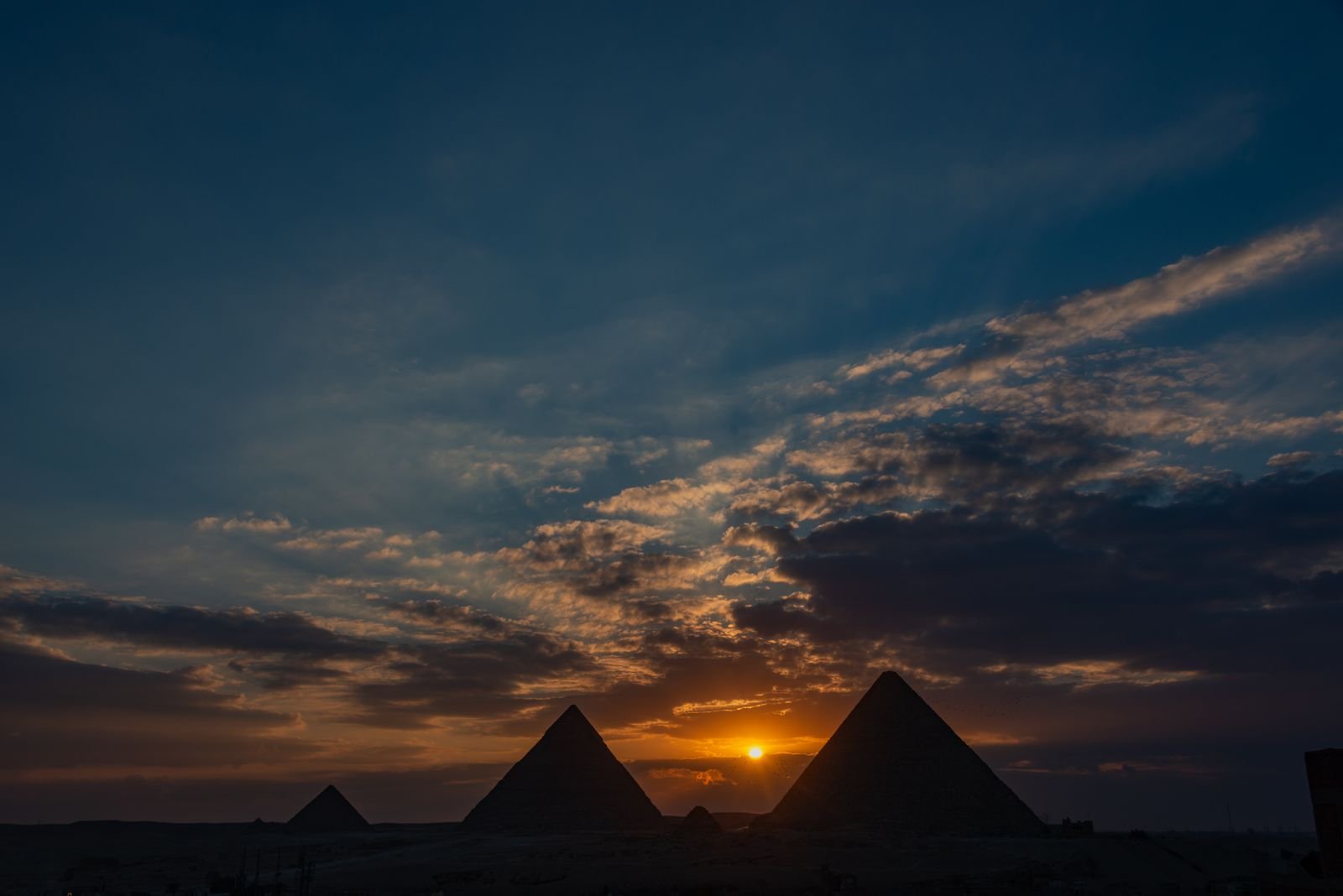
There are three pictures at Giza and they live in three places. The first is the panorama point on the high ground south of the plateau, the only spot where the pyramids of Khufu, Khafre and Menkaure line up in one plane without overlapping, with clean desert in front. Every bus stops there, so arrive when it is empty, which means opening time.
The second is the camel silhouette, from the same point. You want the sun low and behind the camel, so you shoot toward the light and expose for the sky, letting the rider go black against the glow. Late afternoon gives the warmest sky for this.
The third is the Sphinx. It faces east, so the morning sun lights its face and by afternoon the face is in shadow. For the head-on portrait, stand on the terrace directly in front of it and use your phone's zoom to compress the distance. For the classic frame with the pyramid of Khafre behind its head, move to the right side of the esplanade rather than the center.
Karnak's hypostyle hall and Luxor Temple after dark
The hypostyle hall at Karnak is a forest of 134 columns, and the image that defines it is a vertical frame from the central aisle looking toward the light. In the late afternoon the sun comes in low from the west and draws bands of light and shadow between the columns. That backlight is the shot, and it exists for about an hour. Put a person at the base of a column and the scale finally reads.
Luxor Temple is the one great temple to see at night. It stays open into the evening, check the current hours when you are there, and once floodlit the colonnade of Amenhotep III becomes a row of gold against black. Arrive at blue hour, the twenty minutes after sunset when the sky is still deep blue and the lights are already on. The minaret of the Abu el Haggag mosque, built inside the temple, tells the story of the city in one frame.
The balloon basket at dawn and the ramps of Hatshepsut
The hot air balloon over Luxor launches from the west bank in the dark, and the pictures happen in a fixed order. First the burner flame lighting the inside of the envelope. Then, as you rise, the other balloons around you, which are the photos everyone actually posts. Finally, from height, the sharp line where the green fields stop and the desert starts, with the temple of Hatshepsut sitting in its bay of cliffs like a model.
The balloon leaves you on the west bank at about seven, exactly when the temple of Hatshepsut at Deir el Bahari wants you. It faces east, so the early sun lights the whole facade evenly. Stand at the bottom of the central ramp, dead center, and shoot wide so the three terraces and the cliff behind them fill the frame in symmetry. By ten the light goes flat and the terraces fill with people.
Aswan: the blue walls of the Nubian village, a felucca at sunset and Philae from the boat
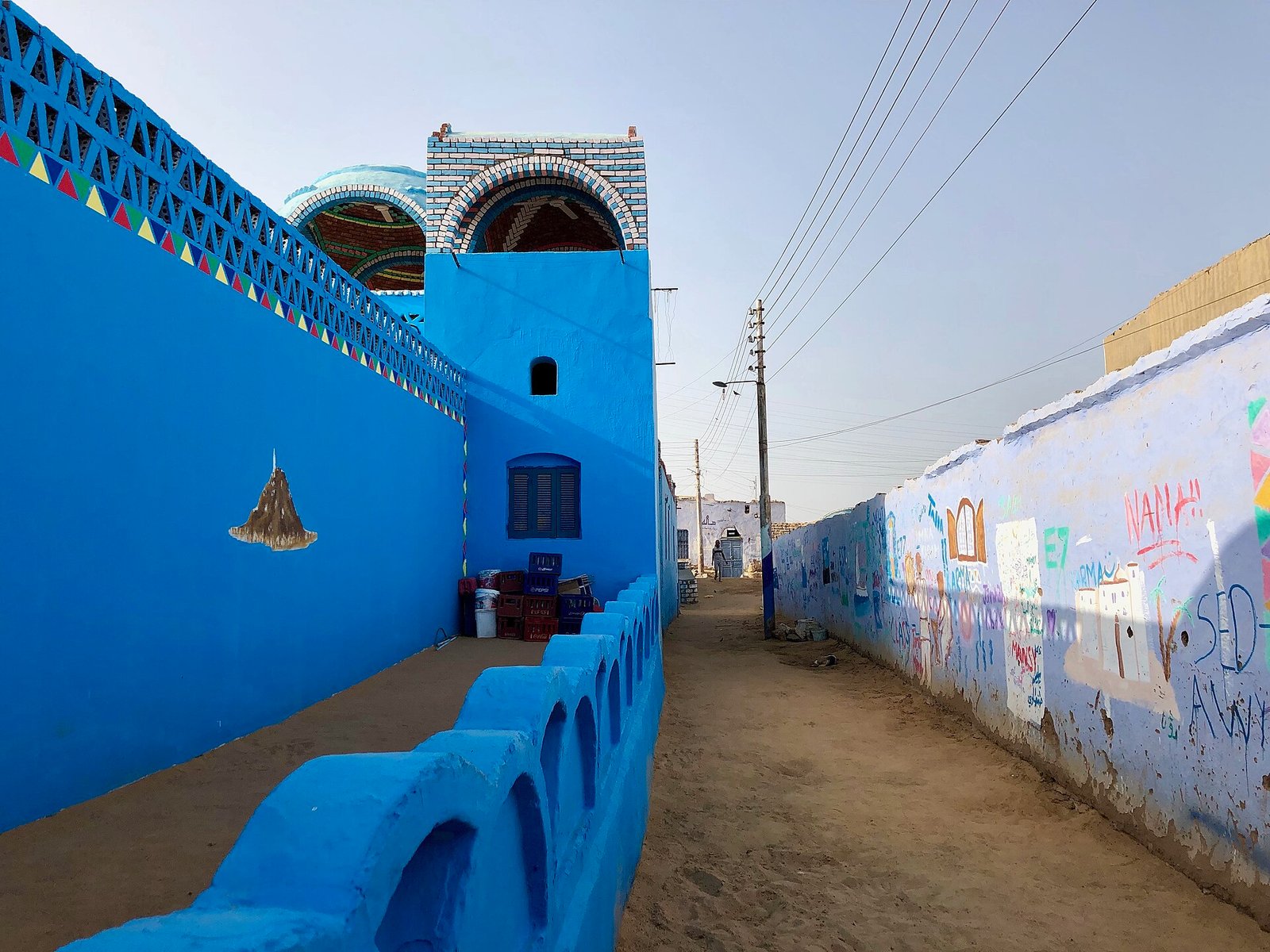
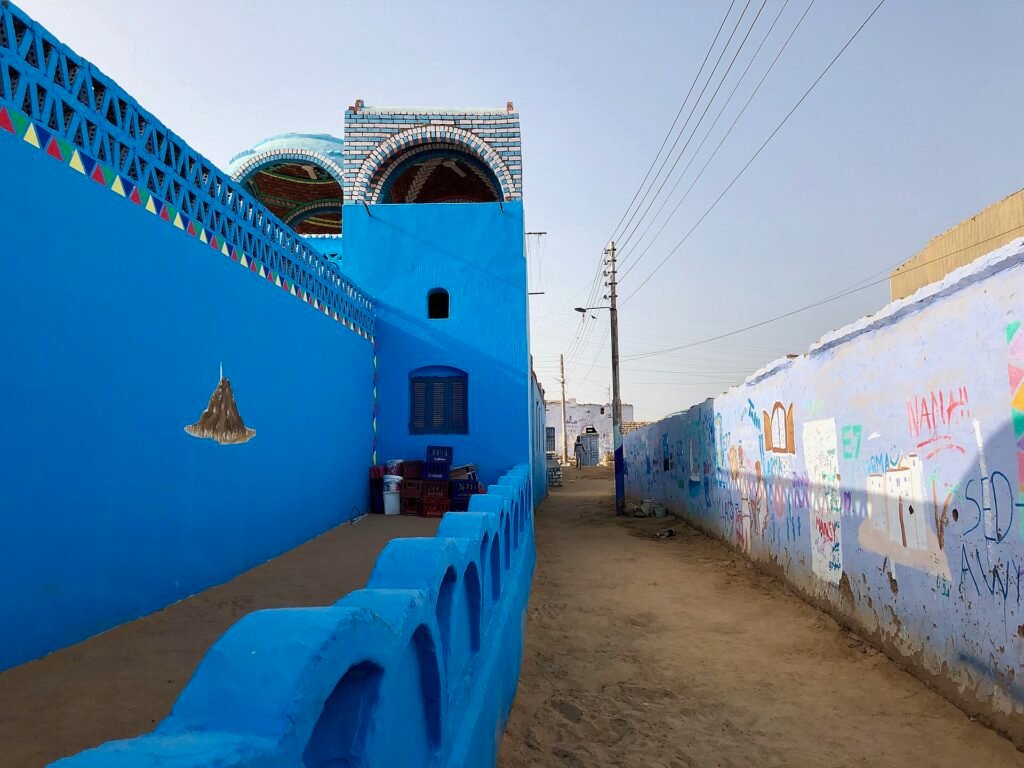
Aswan is where Egypt turns to color. The Nubian village at Aswan, on the west bank at Gharb Soheil, is a village of domed houses painted deep blue, yellow and pink, with decorated doors and sand streets. The blue alleys photograph better in diffuse light than in direct sun, because hard contrast burns out the white trim. Mid-morning or the last hour before sunset gives the truest color. Shoot the alleys lengthwise so the doors recede, and ask before pointing a camera into a family courtyard.
The felucca picture depends on where you are. From the east bank corniche in the late afternoon, the sun drops behind Elephantine Island and the white sails cross in front of it. From the water, the best subject is another felucca nearby, not your own. Either way, stay for the twenty minutes after the sun goes.
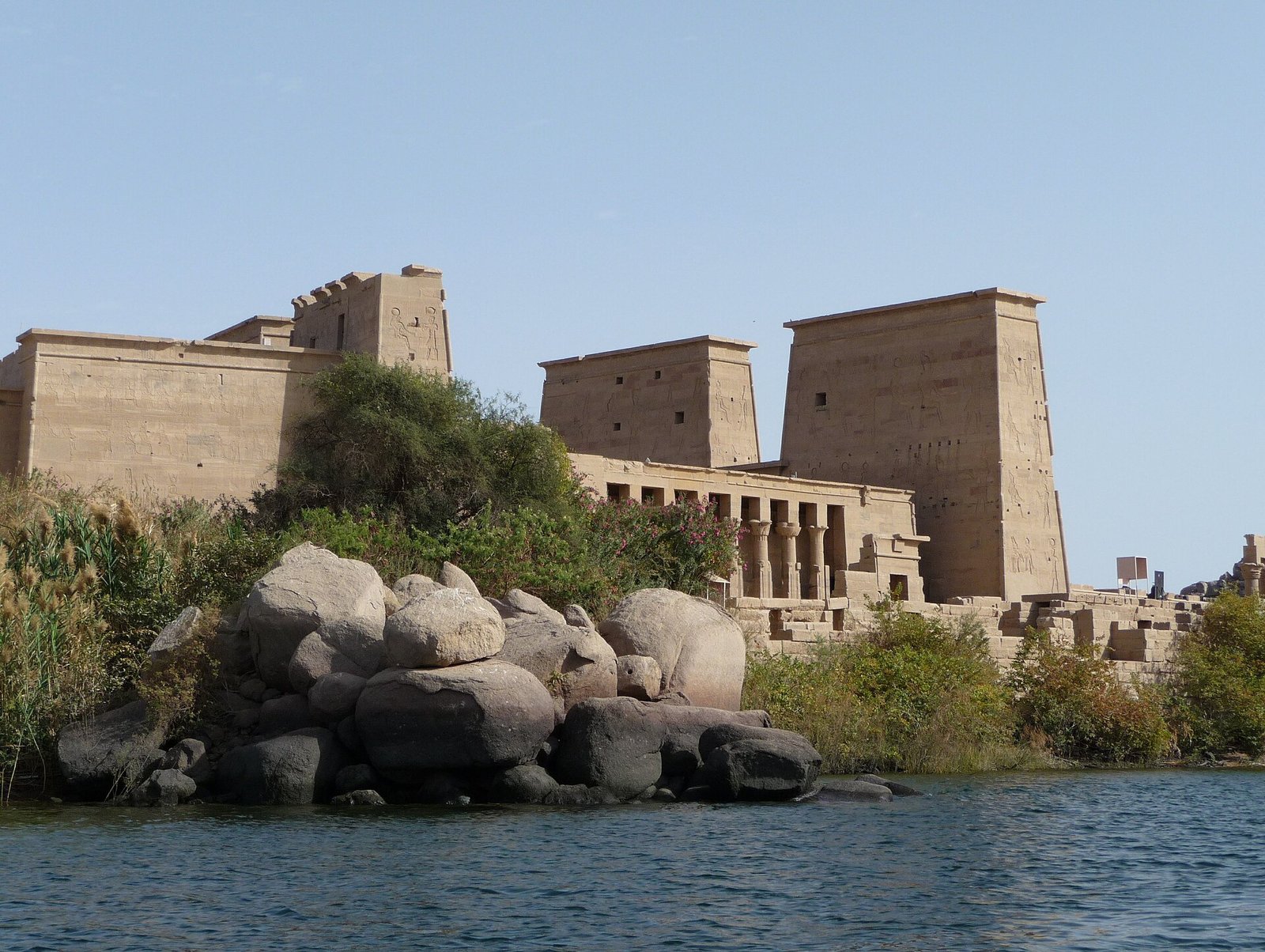
Philae stands on Agilkia Island and is reached only by motorboat, which is the point: the picture is the approach. As the boat rounds the granite rocks, the first pylon rises straight out of the water with reeds in the foreground. Take the early boat, before the cruise buses, and the landing stage is empty.
Abu Simbel's facade, and why you have to step back
Up close, the four seated colossi of Ramses II do not fit in the frame and the temple loses its scale. The whole facade demands that you walk back toward the edge of Lake Nasser and shoot from there, with water and sky giving it room. Then put a person in the picture, small, near the entrance between the statues. That one figure is what makes viewers understand how big the colossi are.
The facade faces east, so the good frontal light is the first light of the day, right when the first groups arrive from Aswan. By late morning the sun has moved over the cliff and the faces go flat. The smaller temple of Nefertari, a short walk north, gets the same light and far fewer people.
Siwa's salt pools and the mushrooms of the White Desert
The salt pools of Siwa Oasis are the one place in this guide where the midday rule is reversed. The pools are cut into the salt flats east of town, white crust around water of an unreal turquoise, and that turquoise is strongest when the sun is high and shines straight down into it. Go at midday and float with your feet up for the picture everyone takes. Save the soft light for the mud ruins of the Shali fortress and for sunset over the lake from Fatnas Island.
The White Desert is reached by 4x4 from Bahariya and rewards patience more than any other landscape in the country. The chalk formations, the mushroom, the chicken, the rabbit, turn gold in the last hour of sun and then, at blue hour, glow against a darkening sky as if lit from inside. Camp there. On a night with no moon the Milky Way sits over the formations, and a headlamp waved across the chalk during a long exposure gives you the picture that makes people ask where on earth you were.
Dahab's Blue Hole from above
Everyone knows the Blue Hole from underwater. The Instagram picture is from above. North of Dahab, the track that climbs from the Blue Hole toward the Bells looks straight down onto the dark navy circle sitting in the pale turquoise of the reef, with the mountains of the far shore of the gulf floating behind it.
Timing here is the opposite of the temples. The hole faces east across the Gulf of Aqaba, so in the early morning it is backlit and reads as gray. From late morning into early afternoon the sun is high, the water goes electric and the reef edge separates cleanly from the deep. That is also the hottest hour on that path, so carry water. Back in town, the Lighthouse promenade at sunset is the second Dahab picture.
Cairo after dark: the lanterns of Al Muizz street and the lamps of Khan el Khalili
Al Muizz street is the spine of medieval Cairo, pedestrian for most of its length and lit at night. The frame is vertical, looking up the street with the facade of the Qalawun complex on one side and the minarets stacking toward Bab al Futuh at the end. Come at blue hour so there is still color in the sky above the minarets, and know that Thursday and Friday evenings are far busier.
A few minutes away, Khan el Khalili keeps its most photographed corner in the lamp shops near Al Hussein square. Step inside one, look up, and the ceiling is a hundred brass and colored glass lamps all lit at once. Ask the shopkeeper first. He will say yes, and the decent thing after that is to buy something small or leave a tip.
Photo etiquette: people, mosques and tombs
People
Egyptians do not generally mind being in a photograph. What they mind is being photographed as if they were scenery. Asking first changes the reaction completely, and most of the time the answer is yes. In the touristic spots, someone in a striking outfit or with a camel will pose and then expect a tip. That is not a scam, it is a job. If you do not want the deal, do not take the picture. With children, ask an adult. With women, ask the woman, not the man beside her, and accept a no.
Mosques
Inside a working mosque you take your shoes off, cover shoulders and knees, and women cover their hair. Photographing the architecture is fine outside prayer times. Photographing anyone praying is not, at any time. Avoid the midday prayer on Friday altogether.
Tombs and museums
In the Valley of the Kings, photography in many tombs requires a separate camera ticket, and in a few it is not allowed at all. The rules change between seasons, so the reference is the sign at the ticket office on the day. In museums flash is banned across the board. Our guide to photography tips and camera rules in Egypt goes through each site in detail.
Tripods, drones and what to leave at home
Tripods are restricted at most archaeological sites and usually need a permit arranged in advance. For the low light of a tomb or a temple at night, brace the camera on a wall or a bag and raise the sensitivity.
Drones are a different matter. Egypt treats them as restricted equipment. Bringing one in without an official permit can mean it is held at the airport on arrival, and flying one near monuments, military areas or the Sinai coast is treated seriously. The permit is a slow process that a visitor on a short trip will not complete. Leave the drone at home and take the balloon over Luxor instead.
Military installations, bridges, airports and checkpoints are never photographed. Put the camera down when the vehicle slows for a checkpoint. Your guide will tell you when.
How Explora Egipto builds the timing around light
A group tour runs on the coach's schedule: Giza at eleven, Karnak at one, Philae whenever the bus arrives. We build each day the other way around, starting from the light each spot needs and working backwards to the wake up call. Because you travel in a private vehicle with your own guide, the order can be flipped, and that is the whole difference between the pictures on this page and the ones in most vacation albums.
| Spot | Hour we aim for | Where you stand |
|---|---|---|
| Giza panorama and camel | Gate opening, or the last hour | High ground south of the plateau |
| Sphinx | Morning | Terrace in front, then step right |
| Karnak hypostyle hall | Late afternoon | Central aisle, vertical, toward the light |
| Luxor Temple | Blue hour | Colonnade of Amenhotep III |
| Balloon and Hatshepsut | Dawn, then before nine | Basket, then the foot of the central ramp |
| Nubian village | Mid-morning or last hour | Along the blue alleys, lengthwise |
| Felucca | Sunset plus twenty minutes | East bank corniche, or a second boat |
| Philae | First boat | From the motorboat on the approach |
| Abu Simbel | First groups of the day | Back at the lake edge |
| Siwa salt pools | Midday | In the water, from the crust |
| White Desert | Last hour, blue hour, night | Camp among the formations |
| Blue Hole | Late morning to early afternoon | The track toward the Bells |
| Al Muizz and Khan el Khalili | Blue hour into evening | Up the street, then inside a lamp shop |
The guide knows which corner of the esplanade puts Khafre behind the Sphinx and which alley in the Nubian village was painted this year. And once the picture is taken, the guide tells you to put the phone away for a minute, because the silence inside a tomb and the sound of water on a felucca hull do not photograph, and they are the parts you remember.
Frequently asked questions
What is the single most Instagrammable place in Egypt?
If you can post only one picture, make it the three pyramids from the Giza panorama point with a camel in silhouette, at opening time or in the last hour before the plateau closes. The close second, and the one fewer people have, is the blue alleys of the Nubian village at Aswan in soft light.
What time should I be at the pyramids for photos?
At the gate when it opens. The first hour gives long shadows, warm light and an almost empty panorama point, and the Sphinx faces east, so its face is lit in the morning. The last hour before closing gives the warmest sky for a camel silhouette, but the morning is easier to combine with the rest of a Cairo day. Avoid ten to three.
Can I take photos inside the tombs in the Valley of the Kings?
In many tombs yes, with a separate camera ticket bought at the entrance, and in a few not at all. Flash is never allowed because it damages the painted plaster. The list of tombs that allow cameras changes between seasons, so the only reliable source is the sign at the ticket office on the day. Your guide checks it before you walk in.
Can I bring a drone to Egypt?
Not without an official permit, and that permit is a slow process a visitor on a short trip will not obtain. Drones brought in without one can be held at the airport, and flying near monuments, military zones or the Sinai coast is a serious matter. Leave it at home. The balloon over Luxor at dawn gives you the aerial photograph you wanted, legally.
Is it okay to photograph people in Egypt?
Yes, if you ask first, and most people say yes with a smile. What causes offense is photographing someone as if they were scenery. Ask an adult before photographing a child, ask the woman herself rather than the man beside her, never photograph anyone praying in a mosque, and expect a request for a tip from anyone who poses in a tourist spot.
Do I need a professional camera, or is a phone enough?
A recent phone is enough for every spot in this guide except the night sky in the White Desert, where a camera with manual settings and a long exposure makes a real difference. For everything else, the hour and the angle matter far more than the equipment. A wrist strap for the balloon, a lens cloth for the dust and a spare battery pack are the accessories that get used.
Come home with the pictures, not just the list
Tell us your dates, who is traveling and which of these spots matter most, and we come back with an itinerary that puts you in each one when the light is right, with a guide who knows where to stand. No prices on this page, just a quote in your inbox.